
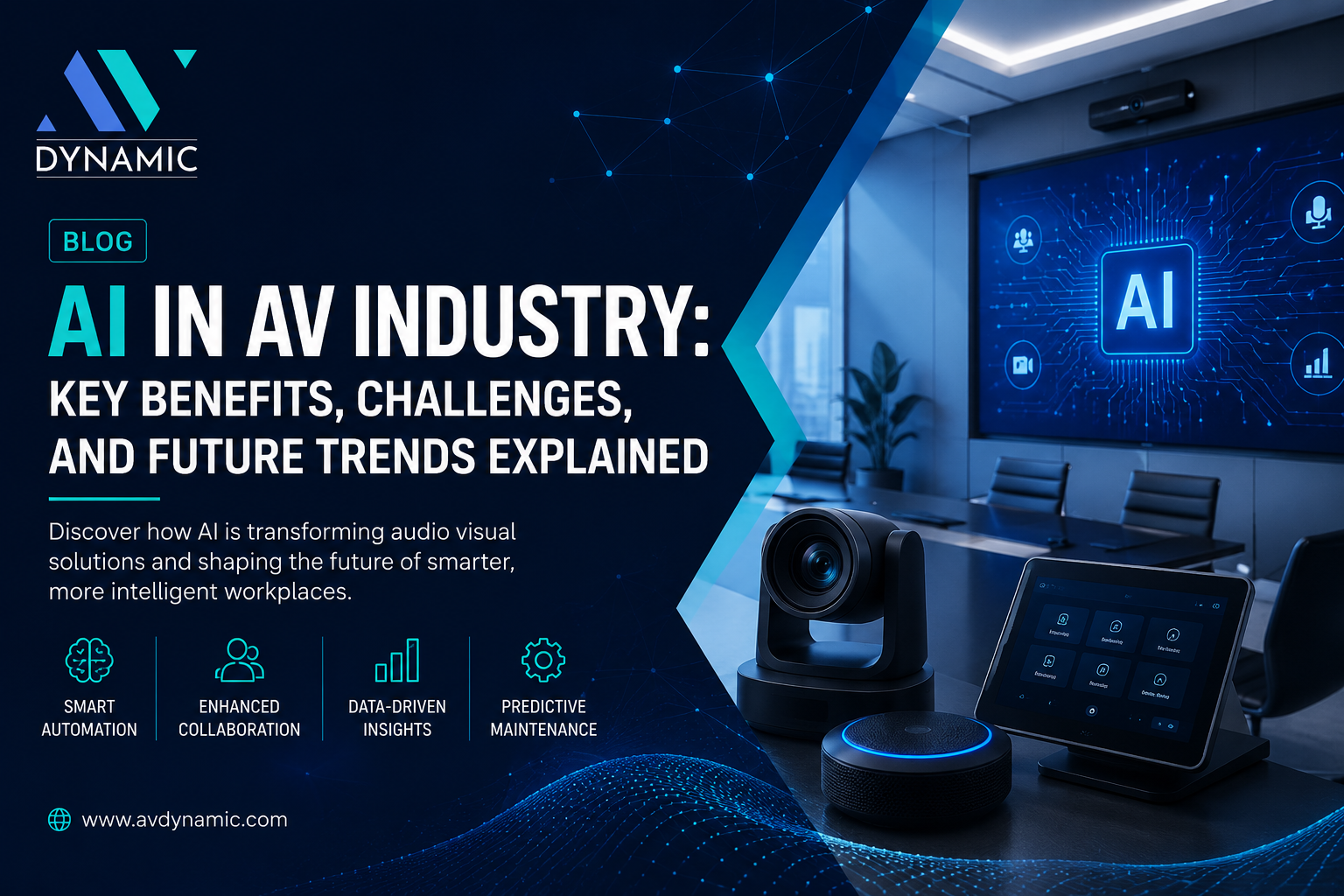
AI in AV Industry: Key Benefits, Challenges, and Future Trends Explained
Introduction
Artificial Intelligence (AI) is transforming industries worldwide, and the Audio-Visual (AV) sector is no exception. From intelligent meeting rooms to automated event management and smart collaboration tools, AI is redefining how businesses communicate and operate. Today, many businesses are looking for innovative ways to improve productivity, collaboration, and customer experiences through advanced AV technologies.
As leading audio visual companies continue adopting AI-powered systems, organizations can now enjoy smarter automation, enhanced analytics, and more personalized communication experiences. Companies like AV Dynamic are helping businesses implement modern AV technologies that combine efficiency, intelligence, and seamless user experiences.
In this article, we will explore how AI is shaping the AV industry, its major benefits, key challenges, and future trends businesses should watch in 2026 and beyond.
What is AI in the AV Industry?
AI in the AV industry refers to the integration of artificial intelligence technologies into audio-visual systems and solutions. These technologies use machine learning, computer vision, voice recognition, automation, and predictive analytics to improve AV operations and user experiences.
Modern audio video solutions powered by AI can automatically adjust sound quality, optimize video conferencing, detect speaker activity, manage lighting systems, and even analyze audience engagement during events or presentations.
AI-enabled AV systems are now widely used in:
-
Corporate meeting rooms
-
Educational institutions
-
Smart offices
-
Healthcare facilities
-
Retail environments
-
Event management
-
Industrial operations
As a trusted av solution provider, AV Dynamic focuses on delivering intelligent AV technologies that help businesses stay competitive in the digital era.
Key Benefits of AI in the AV Industry
1. Smart Automation and Improved Efficiency
One of the biggest advantages of AI in AV systems is automation. AI-powered systems can automatically manage cameras, microphones, displays, and lighting without human intervention.
For example:
-
Cameras can automatically track speakers during meetings
-
Audio systems can reduce background noise in real-time
-
Smart displays can optimize brightness based on room conditions
This level of automation reduces manual effort and improves operational efficiency.
Businesses working with experienced audio visual companies can implement intelligent AV ecosystems that save time and increase productivity.
2. Enhanced Video Conferencing Experience
Hybrid work environments have increased the demand for advanced video conferencing solutions. AI-powered AV systems provide:
-
Automatic framing and speaker tracking
-
Noise cancellation
-
Real-time transcription
-
Language translation
-
Facial recognition for attendance tracking
These features improve communication quality and create more engaging virtual meetings.
Modern audio video solutions are helping businesses conduct smoother and more professional collaboration sessions across global teams.
3. Better User Experience
AI enables AV systems to learn user preferences and optimize settings automatically. This creates a more personalized and seamless experience.
Examples include:
-
Voice-controlled meeting rooms
-
Personalized lighting and display settings
-
Smart content recommendations
-
Automated room scheduling
As an advanced av solution provider, AV Dynamic helps organizations create user-friendly AV environments that improve employee and customer satisfaction.
4. Predictive Maintenance
Traditional AV systems often face unexpected technical failures that disrupt operations. AI can predict equipment issues before they happen through real-time monitoring and analytics.
Predictive maintenance benefits include:
-
Reduced downtime
-
Lower maintenance costs
-
Improved equipment lifespan
-
Faster troubleshooting
Many leading audio visual companies are now integrating predictive analytics into AV management systems to improve reliability.
5. Data-Driven Insights and Analytics
AI-powered AV systems can collect valuable usage data and provide actionable insights.
Businesses can analyze:
-
Meeting room usage patterns
-
Audience engagement levels
-
Equipment performance
-
Collaboration efficiency
These insights help organizations optimize resource utilization and make better business decisions.
Challenges of AI in the AV Industry
While AI offers significant advantages, there are still several challenges businesses must address before fully adopting AI-powered AV technologies.
1. High Initial Investment
Implementing AI-enabled AV infrastructure often requires substantial investment in:
-
Smart hardware
-
AI software platforms
-
Cloud integration
-
Network upgrades
Small and medium-sized businesses may find the initial costs challenging.
However, partnering with an experienced av solution provider like AV Dynamic can help organizations choose scalable and cost-effective solutions.
2. Data Privacy and Security Concerns
AI systems often collect and process large amounts of user data, including voice recordings, facial recognition data, and behavioral analytics.
This raises concerns related to:
-
Data privacy
-
Cybersecurity
-
Compliance regulations
-
Unauthorized access
Organizations must implement strong security protocols to protect sensitive information.
3. Integration Complexity
Many businesses still use traditional AV infrastructure that may not be compatible with modern AI technologies.
Challenges include:
-
System integration issues
-
Legacy equipment limitations
-
Software compatibility
-
Network performance requirements
Professional support from reliable audio visual companies is essential for smooth deployment and integration.
4. Skill Gaps and Technical Expertise
AI-powered AV systems require specialized technical knowledge for:
-
Installation
-
Configuration
-
Maintenance
-
Data analysis
Businesses may need skilled IT and AV professionals to manage these advanced systems effectively.
5. Dependence on Internet and Cloud Infrastructure
Many AI-powered audio video solutions rely heavily on cloud computing and stable internet connectivity.
Poor network performance can affect:
-
Real-time collaboration
-
AI processing speed
-
System responsiveness
-
Remote access functionality
Businesses must invest in reliable infrastructure to maximize performance.
Future Trends of AI in the AV Industry
The future of AI in the AV industry looks extremely promising. Emerging technologies are expected to create even smarter, more connected, and immersive AV experiences.
1. AI-Powered Smart Meeting Rooms
Future meeting rooms will become fully automated environments capable of:
-
Voice-controlled operations
-
Automatic participant recognition
-
Intelligent scheduling
-
Real-time meeting summaries
These innovations will improve workplace collaboration and productivity.
2. Advanced Virtual and Augmented Reality Integration
AI combined with AR and VR technologies will create immersive communication experiences for:
-
Corporate training
-
Virtual events
-
Remote collaboration
-
Product demonstrations
Leading audio visual companies are already exploring these next-generation technologies.
3. Intelligent Content Management
AI will help businesses manage digital content more efficiently by:
-
Automatically categorizing media files
-
Optimizing content delivery
-
Personalizing visual experiences
-
Improving audience targeting
This will become increasingly valuable for enterprises and event management companies.
4. Voice and Gesture-Based Control Systems
Touchless control systems powered by AI will become more common in modern workplaces and smart buildings.
Users will be able to:
-
Control displays using voice commands
-
Adjust room settings through gestures
-
Manage meetings hands-free
This technology will improve convenience, hygiene, and accessibility.
5. Sustainable and Energy-Efficient AV Systems
AI will play a major role in reducing energy consumption through:
-
Smart power management
-
Automated device shutdown
-
Energy usage analytics
-
Environmental optimization
Sustainable AV technologies will become a major focus for businesses in the coming years.
Why Businesses Should Invest in AI-Powered AV Solutions
Businesses that adopt AI-driven AV technologies gain a competitive advantage by improving communication, collaboration, and operational efficiency.
Benefits include:
-
Improved productivity
-
Better customer engagement
-
Reduced operational costs
-
Smarter decision-making
-
Enhanced workplace experiences
Choosing the right av solution provider is critical for successful implementation and long-term growth.
AV Dynamic provides innovative and scalable AV technologies tailored to modern business needs. Their expertise in intelligent audio video solutions helps organizations stay ahead in a rapidly evolving digital landscape.
Conclusion
AI is revolutionizing the AV industry by introducing smarter automation, intelligent collaboration tools, predictive analytics, and immersive communication experiences. As businesses continue embracing digital transformation, the demand for AI-powered AV systems will grow rapidly.
Although challenges such as integration complexity, cybersecurity concerns, and high initial investment still exist, the long-term benefits far outweigh the limitations.
Forward-thinking audio visual companies are already leveraging AI to create more efficient, secure, and personalized AV experiences for businesses worldwide.
With the support of trusted partners like AV Dynamic, organizations can successfully implement advanced audio video solutions that drive innovation, productivity, and future-ready communication environments.

 Thai
Thai
